Marco Elia Righi
Horn Player - Composer
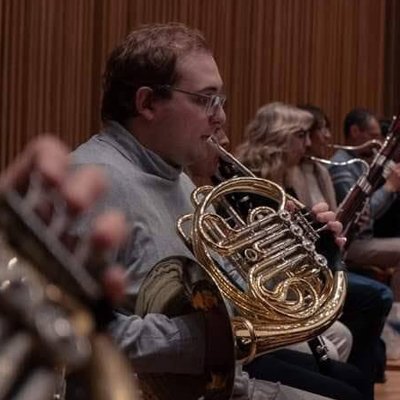
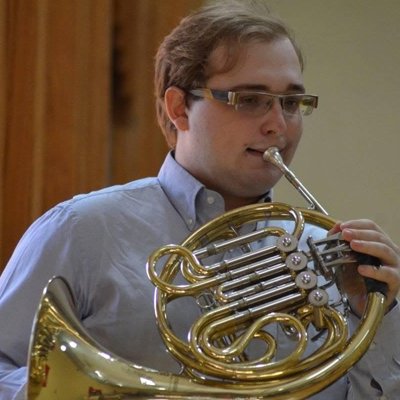
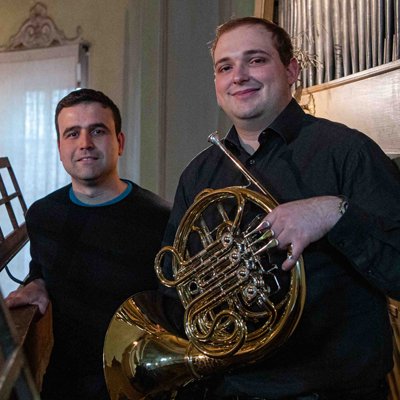
Marco Elia Righi is an Italian horn player, composer and arranger, born in Montecchio Emilia in 1998 and trained at the “Achille Peri” Conservatory in Reggio Emilia. His work combines performance, composition and musical research, with compositions and arrangements performed in Italy and abroad.
Since 2018, his compositions and arrangements have been commissioned and performed by ensembles and institutions including L’Ora della Musica, Fondazione Nazionale della Danza, Icarus vs Muzak, Placard Wind Quintet, FORM – Orchestra Regionale delle Marche, Sinfonietta Rīga and Wunderkammer Orchestra.
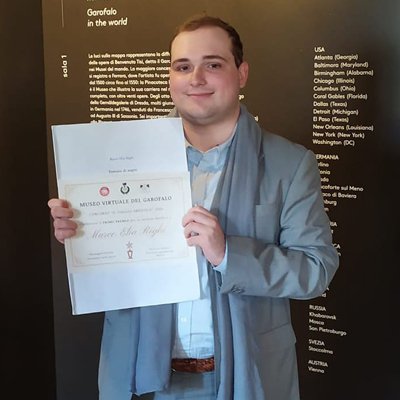
In 2025, Marco Elia Righi received the first absolute prize in the Composition category of the Giuseppe Alberghini Prize for Finissimi sistri d’argento, for harp and guitar. His other distinctions include first prize for In Silva and the overall prize in the Music section of the Il viaggio artistico competition for Foresta di sogni.

Who is Marco Elia Righi?
"Best Graduate of the Conservatory of Reggio Emilia (Academic Year 2021/2022)"
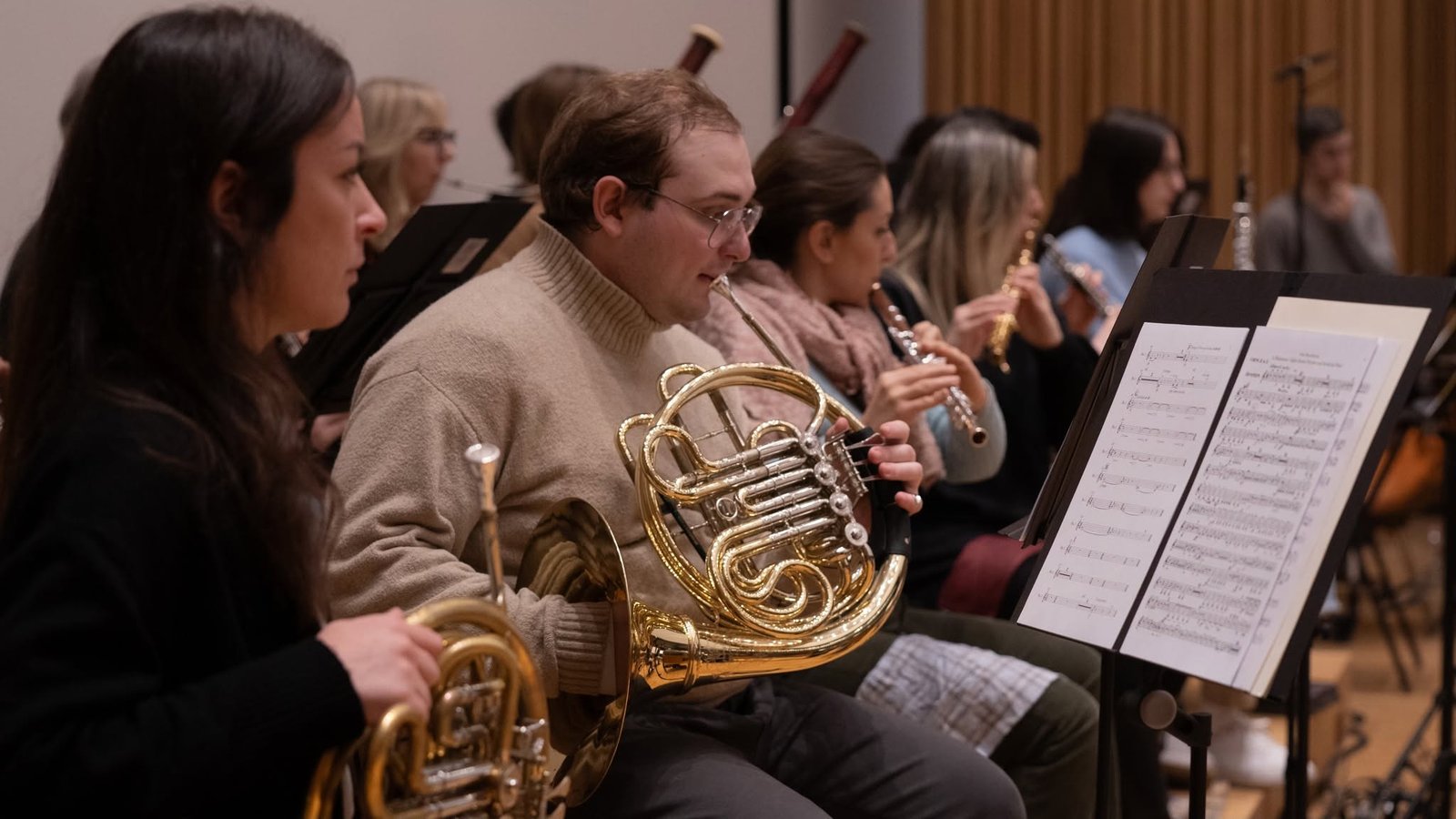
Marco Elia Righi is an Italian musician specialising in the French horn and musical composition. As a horn player, he has collaborated with Italian orchestral organisations; as a composer, he has written music for orchestra, ensembles, solo instruments and chamber formations. His catalogue includes original compositions, arrangements and commissioned works.
Learn more about his training, work as a horn player, compositions, awards, commissions and artistic collaborations.
Browse publications, composition competitions, commissions, artistic projects and available works.
Discography
Most Representative Works
Listen to a selection of my best compositions – a window into my eclectic musical vision.
Foresta di sogni
The theme of the journey has always accompanied my music, and it plays a central role in Foresta di sogni (per grande orchestra) è centrale. Il brano è liberamente ispirato al sonetto Correspondances di Charles Baudelaire, ed esplora la figura della sinestesia (la possibilità di incrociare i fili dei nostri sensi) in ambito musicale. Foresta di sogni evoca, tramite sensazioni sinestetiche, un viaggio nel mondo interiore dell'autore. L'esposizione della mente inconscia si declina tramite cambi di scenario a volte repentini, ma sempre interconnessi e organici.
Si dice che quando si ascolta un brano è la musica che cambia, mentre quando si guarda un quadro siamo noi a cambiare. L'esperienza di ascolto di Foresta mira a riunire entrambe le prospettive. Ho la speranza di dopo essere stati immersi in questo breve brano una parte di voi ne esca rinnovata.
Segni
Few elements of the modern soundscape have remained unchanged, or nearly so, over the last fifteen centuries. One of these is certainly the sound of bells, which (at least in Europe) still marks the passage of time in both urban and rural contexts. Discovering that two families in my family tree were bell ringers—a profession passed down from father to son and considered equivalent to that of "musici" (musicians)—led me to seek the basis for my composition in the repertoire of bell-ringing typical of my city, Reggio Emilia. The musical source material for the piece is based on several melodies and bell-ringing patterns collected by the Reggio Emilia composer Guglielmo Mattioli just over a century ago, in 1922, and also on spectrographic analysis of the bell concert of the Basilica della Ghiara in Reggio. The purpose of my piece is not to imitate the sound of bells—perhaps among the most inimitable, for the richness and uniqueness of their timbre—but to evoke what this sound has signified over the centuries: births, deaths, marriages, invasions, epidemics, victories... The passage, recounted in sounds, of History in the stories and lives of ordinary people. Lives held together by "signs" (Segni)—the ringing of bells at Mass and solemn celebrations—even across the centuries.
Canti di cavalieri
Canti di cavalieri (Songs of Knights) is a suite of seven miniatures from the folk repertoire. It was first composed in 2024 in a version for solo piano. I first came in contact with the folksongs in this collection thanks to the extraordinary etnomusicological research of Marcello Conati, in his book Canti popolari della Val d’Enza e della Val Cedra (Folksongs of Val d’Enza and Val Cedra). The two valleys are a fascinating land comprised in the mountain region of the provinces of Reggio Emilia an Parma, a territory that has been known for centuries as the “Valley of Knights”. I feel a stong connection with the songs of this land because my family tree extends largely in the provinces of Reggio Emilia and Parma, even though not specifically in the Valley of Knights. Many times, during the numerous rewrites of the piece, I’ve asked myself whether my ancestors knew ans sang the songs in this collection. Even if at the moment I can’t know for certain, I feel a sort of visceral connection with some of these songs at an energetic, almost “genetic” level - almost as they have always been part of my life, even if I have known them only for the last couple of years.
Concerto per Corno e Orchestra in D Major, KV412: II. Andante
Wolfgang Amadeus Mozart’s concerto K412 is universally recognized as one of the cornerstones of horn repertoire. Although the concerto is often listed in concert programs as “No. 1,” most likely the date of composition dates back to the last year of Mozart’s life (1791), making it in fact his last work for horn and orchestra. Only a few fragments remain of the manuscript, left unfinished by Mozart, and completed by his favorite pupil, Franz-Xaver Süssmayr. While in the first movement (Allegro) Süssmayr’s interpolations concern only the orchestral fillings of the woodwinds, in the rondo they are much more pronounced, de facto constituting a reworking that deviates greatly from the original. This edition aims to return to the performer a complete version of the concerto, preserving the first movement from the original manuscripts, adding an andante written in Mozart’s style and playable on the natural horn, and reconstructing the original version of the rondo.
Media
Photo Gallery
Marco Elia Righi: domande frequenti
Who is Marco Elia Righi?
Marco Elia Righi is an Italian horn player, composer and arranger born in Montecchio Emilia in 1998 and trained at the Conservatory in Reggio Emilia.
What instrument does Marco Elia Righi play?
Marco Elia Righi is a horn player. He began studying the horn at the age of eight and earned academic diplomas in horn at both first and second level.
What does Marco Elia Righi do?
He works as a horn player, composer and arranger. His works have been commissioned and performed by ensembles and institutions in Italy and abroad.
Which awards has Marco Elia Righi won?
Among his recent distinctions are the first absolute prize in the Composition category of the 2025 Giuseppe Alberghini Prize for Finissimi sistri d’argento and the overall prize in the Music section of the 2024 Il viaggio artistico competition for Foresta di sogni.
Where can I find Marco Elia Righi’s compositions?
The website catalogue collects publications, award-winning compositions, commissioned works, arrangements and links to scores and recordings.